


Because I am here not only to entertain but to educate let me state for the masses that a ghoul is a shape shifting monster descended from Satan that has its roots in Arabian folklore and is spoken of in the Koran, and a goblin is a gnome-like creature with origins in European fairy tales that is more mischievous than evil. These terms aren’t all that necessary in relation to the topic du jour but I have an affinity for inconsequential yet semi-fascinating minutia.
Readers of The Manofesto know that I have rather robust views on a variety of subject matter, from politics & religion to sports & entertainment. So my ambivalence toward Halloween may come as a bit of a surprise to some. I am a fairly middle-of-the-road Christian, which usually means I cannot win. Our world has been so programmed with politically correct garbage like “tolerance” and “multiculturalism” that anyone that takes a stand for morality and the teachings of Christ is looked upon with scorn. Conversely, I know too many brothers & sisters in faith who are so hardcore, so serious, so unwilling or unable to loosen up that sometimes my views are looked upon by them as lackadaisical. So be it. I am who I am, I know what I know, and I believe what I believe. Time and experience molds us all, beliefs and attitudes do change.

Halloween, or All Hallows Eve, began as a Celtic festival called Samhain in 16th century Ireland. The Celts were much more than a basketball team from Boston. They were a tribal society in Central Europe during The Iron Age that eventually migrated to Great Britain by the 1st Century AD. The Celts were polytheists, which meant that they had literally hundreds of gods and goddesses. They tended to worship nature, believing that many natural things contained spirits with which they could communicate. The tribal clergymen were known as Druids and were held in high esteem amongst the social order of the day. One of the responsibilities of the Druids was to lead the four annual religious festivals. Imbolc was held at the end of January and marked the beginning of spring. Beltane was held on May 1 and celebrated the coming of summer. Lughnasadh was a harvest celebration held in August. And then there is the festival that eventually begat what we know as Halloween…Samhain (pronounced saw-een), the most important of the four festivals. Samhain can be loosely translated as “summer’s end” (and is NOT the Celtic god of the dead), and it marked the time of year when the days began to grow shorter and darkness lasted longer. But there is a lot more to it than that.

The Celtic people did not have the understanding of Heaven and Hell that is common in our modern world. They believed in what they called the Otherworld, a place where their deities, spirits, and the dead resided. On October 31st they thought that the passageway between this world and the Otherworld was opened, allowing spirits, both evil and benevolent, to roam in their midst. Sounds crazy, right?? Probably. But it is what these folks believed. It was a scary time for the Celts. Think about autumn. Much of the time it is cold, dreary, and dank. Crops won’t grow. Leaves are falling from the trees and other foliage is dying. The dead foliage in turn prevents animals from grazing, so whatever food was on hand at the time had to last them through the long hard winter…no freezers, grocery stores, or other conveniences were available after all. We have a scientific understanding of the whats, the whens, and the whys…they did not. So in order to appease the evil spirits and prevent mayhem and destruction the Celts decided to offer sacrifices of food and occasionally livestock. Hence the earliest version of trick-or-treat. They also built bonfires and inserted candles into turnips to “light the night”. When Irish immigrants came to America after the potato famine of the mid-19th century they continued their familiar rituals, including Samhain, but found pumpkins more plentiful than turnips, and boom…the jack-o-lantern was born. An old folktale is attached to the jack-o-lantern wherein a really bad guy named Jack is so malevolent that he’s banned from both Heaven and Hell and therefore doomed to roam the Earth with nothing to light his way but a candle inside a turnip. Another tradition was dressing up in scary costumes to hopefully keep the evil spirits away. At some point during these Samhain celebrations bobbing for apples became a popular component of the celebration, in no small part due to the spread of the Roman Empire. Bobbing for apples was an ode to Pomona, the Roman goddess of love & fertility. Those wacky Celts also believed that oftentimes spirits inhabited the bodies of animals, most notably the black cat.
Enter Christianity, which began to spread like wildfire just prior to The Middle Ages. It is easy to imagine that pagan rituals and beliefs did not sit well with Christians, and they wanted to spread the gospel of Jesus Christ. So they came up with a great idea…they moved All Saints’ Day, a holiday celebrating the lives of saints who didn’t already have their own special day, to November 1st. All Saints’ Day is also known as All Hallows’ Day, which makes October 31st All Hallows’ Eve, aka Halloween. One can debate the success of this strategery, as thousands of years later Halloween is one of our most popular holidays while All Saints’ Day, especially outside the Catholic church, doesn’t seem to have retained much significance. But hey, it was worth a shot, right??
I am not a historian and am far too faineant to spend endless hours doing research, so this isn’t exactly a thorough examination. However, you get the basic gist.

Now let us fast forward to where Halloween stands in America. Many tired, poor, huddled masses, yearning to be free, began immigrating from Europe to America in the 19th Century. Naturally they brought with them the traditions of their homelands. The Irish brought us Halloween. Today’s Halloween is pretty simple. For children it is an opportunity to dress up and go door-to-door to score bags full of candy. For adults it is just another excuse…as if any old Friday or Saturday night isn’t already enough of one…to party, i.e. dance and drink copious amounts of adult beverages. The question is, does this make us a bunch of Satan worshiping heathens?? As you may have already guessed, my answer to that query is “no”. Furthermore, it is my opinion…your mileage may vary…that those who try to make modern Halloween something sinister are silly.
First of all, if one really wants to go all those centuries back to the beginnings of the holiday the line must be drawn between paganism and Satanism. Contrary to popular belief there is a difference. Paganism, especially all those years ago, was a sin of ignorance not evil. They worshiped nature as they understood it and went a tad too far by assigning god status to inanimate things. I have a strange sense of pity for these pagans. It seems like their lives were ruled by fear and paranoia, always waiting for some sort of doom to befall them. It sounds like an awful way to live and it is a considerable reach to equate them with Satanists.

Secondly, regardless of what the origins of Halloween were and what one may feel about it, is it fair to even compare Halloween in 21st Century America with what was going on in Ireland 2000 years ago?? Is it rational to think that some little kid dressing up like Batman and trapsing through the neighborhood begging for chocolate has any concept of evil in his/her cute little brain?? Even the thirtysomething going to a costume party at the local pub isn’t doing anything any more heinous than they’d be doing anyway if it was just another weekend and they were getting all liquored up to blow off steam from a rough week at the office, the difference being that once a year they do it dressed as Lady Gaga or one of the idiots from Jersey Shore. So what??


Unfortunately I have a feeling that my passivity toward Halloween is not an attitude shared by a lot of fellow believers. For example, in the course of the negligible investigation I did do for this diatribe I found the following from televangelist Pat Robertson: “I think we ought to close Halloween down. Do you want your children to dress up as witches? The Druids used to dress up like this when they were doing human sacrifice. The children are acting out Satanic rituals and participating in it, and don’t even realize it.” Sorry Pat, but you’re wrong. The Celtic people didn’t leave a lot of photos or other memorabilia, so we don’t actually know how the Druids dressed, and who can say with any authority how witches typically dress (then or now) anyhow?? Plus, as already covered, these Druids were doing pagan rituals…not Satanic rituals. And our children aren’t acting out anything…they are having fun. Maybe Pat Robertson should try that sometime. I also found this gem: “Many religious conservatives regard themselves, their families and friends as continuously being at risk for demonic oppression or possession. Conservative Christian psychiatrist David Enoch has said that: “Halloween practices open the door to the occult and can introduce forces into people’s lives that they do not understand and often cannot combat.” Some believe that “doorways” which allow Satan to have access can be created by something as simple and innocent as bringing a box of Celestial Seasonings tea into the home. These have a 5-pointed star on the rear of the container. This is a “Star-K” certification symbol indicting that the products meets kosher food requirements as stipulated in the Old Testament. However, many conservative Christians believe it is a Satanic symbol. Having such a box of tea in the house is said to give Satan the “legal right” to enter the home and attack the family. A “doorway” could also be created by a Wiccan healing ritual, acupuncture, yoga exercises, hanging an aboriginal dream-catcher on the wall, or engaging in thousands of other activities.”
If you believe that a box of tea, yoga, or acupuncture are pathways for Satan to possess people then you are a moron.
Even Christians who attempt to continue the long and storied history of usurping the original meaning of an event and giving it a Godly spin aren’t good enough for some when it comes to Halloween. Many churches do things like Light the Night or Harvest Parties in an effort to remove the “darkness” motif and emphasize the Light of Jesus. A great idea in my opinion. But again my minimal efforts brought forth the following: “Harvest parties on October 31 tend to assume that our children need something to take the place of Halloween since they won’t be participating in the secular and pagan celebrations. It suggests our kids are missing out on something. And indeed they are, if we allow them to spend Halloween in celebration. There are better things to do on Halloween than partying. If we are to train our children to be soldiers in the army of Christ, why would we sign a pass for them to go on leave when the battle is escalating on the front lines?”
Come on folks…these are kids we’re talking about!! There are better things to do on Halloween than celebrating & partying?? Not to an 8 year old. Soldiers?? Battles?? Front lines?? How about we let them enjoy their childhood?? I believe wholeheartedly in training a child right, bringing them up in church, and teaching them about God, salvation, prayer, and various other things. But I also think that Christians…both children and adults…are allowed to enjoy themselves occasionally. Church folk who take themselves way too seriously are not doing the faith any favors.


Are there negative things associated with Halloween that I don’t like?? Sure. I am not a fan of horror movies at all, and there are a lot of them on TV and in theaters this time of year. I prefer to laugh and have a good time instead of seeing fictionalized depictions of death and mayhem. People who are a little too into scary movies are definitely wired differently than me. Witches aren’t at the top of my list of favorites either. I also think that moderation should be exercised when choosing costumes. Graphically bloody costumes aren’t all that appropriate, especially for children. But is this really even an issue?? For as long as I can remember most of the kids I’ve encountered on Halloween have been dressed rather innocuously. Superheros like Spiderman and Superman, whomever the sports stars du jour are, characters from popular movies and television shows, and general “characters” like firemen, soldiers, and cowboys always seem to be what the kids dress like, not mass murderers, Satanic figures, or any other manner of evilness. One of the biggest selling costumes for 2010 is apparently President Obama. I may not be a fan of his policies but even I will admit that he isn’t an agent of the devil. Now Oprah on the other hand…..
Anyway, that is my opinion. Will I feel the same in 20 years?? I don’t know. If you disagree that’s fine and I respect your opinion. However, I do prefer that opposing opinions have some basis in reality and be expressed intelligently. I don’t mind debates about politics or religion except when the parties involved are complete fools, which, unfortunately, is all too common. I just do not believe that going to a haunted house or reading a well written ghost story condemns a person to the fiery pits of Hell. Halloween, if anything, is a fantastic opportunity to witness to people, to talk about light vs. darkness, hope vs. fear, and eternal life vs. death. I think that is something upon which most would agree. The debate is how best to seize that opportunity. I choose to have some fun, look for ways to inject Godly wisdom into the situation, and try to find a way to pragmatically relate to as many people as possible. Others choose to condemn, hide from, or ignore what is all around them, which just makes them look foolish and judgmental. How do you view the issue??
Related Articles
- Teach Your Kids about All Hallows’ Eve, All Saints’ Day and All Souls’ Day (halloweenforkids.blogspot.com)
- Samhain (socyberty.com)
- Remembering All Hallows Eve, All Saints & All Souls Day (brighthub.com)
- Halloween: Old English Folklore or Fact? (groupon.co.uk)
- The History of Halloween (socyberty.com)
- Halloween Facts! (socyberty.com)
- Harvest Party vs. Halloween Trick or Treating (halloweenforkids.blogspot.com)
- HALLOWEEN AND THE DRUIDS (with recipe) (gail1booboo.wordpress.com)
- Facts about Halloween and Christian WARNING (codybateman.org)
- This is Halloween | Ramblings of a Ruminator (karenoconnordesmond.wordpress.com)
 whom I considered my friends live far away from me…Dallas TX, Columbus OH, Charleston WV, and many other far flung towns across the map, from Montana to Georgia to Florida New York to California. So I am grateful that technology allows me to maintain some form of contact. However, Facebook is also rather addicting. There are countless games, quizzes, polls, and other applications that one can mindlessly get lost in for hours. I’m not against some pointless fun on occasion, but I do feel like I waste a lot of time that could otherwise be spent on more consequential activities like prayer, studying The Bible, reading a good book, or even getting the proper amount of sleep.







 fondly recall the Saturday morning Chipmunks cartoon. But their first success is still their best…an almost too simple tune about being anxious (as most kids are) for Christmas to arrive and wanting toy planes and a hula hoop.
 Jesus and the gift of salvation to the world, it’s a tune supple enough to be energetically sung by a choir or congregation, or solemnly played by any manner of instrument.
 would give anything if all their kids wanted were hopalong boots or dolls that can talk as opposed to the mega-expensive video games, computers, and various other electronic toys today’s children demand, and a lesson in economics can be gleaned when pondering a “five-and-ten” in comparison with their modern counterparts, dollar stores. I dig almost anything that hearkens back to a less complicated time, even if, in reality, those times weren’t much less complicated.
  I made this a tie for one reason. These three songs have a common thread…home. However and wherever one defines “home”, it’s where we want to be for Christmas. I’ll Be Home for Christmas was written and recorded during World War II and was extremely significant to soldiers and their families.
 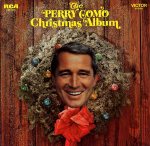 home”. Please Come Home for Christmas has a couple things going for it in my universe. It was originally a blues carol, and its best covers have been done by two of my favorite bands,
  Another tie, another reason. Both of these songs have attachments to movies. Let It Snow is played at the end of my favorite action flick, Die
  Hard, which I consider a Christmas movie even if no one else does. Meli Kalikimaka (Hawaiian for Merry Christmas) is prominent in Chevy Chase’s classic Christmas Vacation. Bing Crosby does the definitive version of Mele Kalikimaka, while Let It Snow is done best by original artist Vaughn Monroe but a viable alternative is the Dean Martin cover. Let It Snow is technically a winter song and makes no references to Christmas at all, but it has become so closely associated with the holiday season that it qualifies as a Christmas carol.
 into English as the more familiar O Come All Ye Faithful in the 19th century. The words of the song exhort us to celebrate the birth of Christ, to adore and behold The King. However, I have to say that the best versions of this song are audacious, grand, thunderous ensemble pieces by orchestras like The Boston Pops or the Mannheim Steamroller.
 (brother of John, the founder of Methodism) and paired with music composed by Felix Mendelssohn a hundred years later, this is just one of those songs that IS Christmas. It speaks of everything Christmas should encompass: glory to The King (Jesus Christ, not Elvis), peace, mercy, joy, triumph, and righteousness. Like other songs it speaks about the birth of Christ and what that means to the world, and since that is the whole point of Christmas it’s fine with me if the message is rehashed in as many songs as possible. Off the top of my head I cannot think of one singular cover that stands out…they’re all great since it’s a pretty difficult song to mess up. It lends itself well to orchestral or instrumental versions, but choral versions with the words are probably my favorite.
 of Christ is the centerpiece of the holiday. Adults who don’t consider themselves to be particularly spiritual appreciate things like home, family, and sentimental memories. But for kids Christmas is all about The Big Guy, the Jolly Old Elf, the fat man in the red suit…Santa Claus. So it makes sense that there would be a plethora of Christmas carols dedicated to Kris Kringle. The two most pervasive of these have been covered by an endless array of artists with mixed results, but they are so wonderful because they are so descriptive. They paint such a vivid picture of the mythology of Santa that anyone who doesn’t know the story can have it re-created in their mind just from these songs. Here Comes Santa Claus was written in 1946 by cowboy Gene Autry, who also sang the definitive version. About Santa, the singer sings “he doesn’t care if you’re rich or poor, he loves you just the same…Santa knows that we’re God’s children, that makes everything right…fill your hearts with Christmas cheer cause Santa Claus comes tonight”. What a great message. Santa Claus Is Coming to Town was written in 1934 and is a sort of cautionary tale for children. It warns them that Santa knows when they are sleeping and awake, knows when they’ve been bad or good, and will be making a list and checking it twice so he can divide it into two categories: naughty and nice. Call it gentle discipline or call it mind games…but it works and has scared millions of kids into being good little boys and girls. Bruce Springsteen might have the best known cover of the tune, but I think that’s simply because it’s so odd to hear such a gruff and tough rocker singing a children’s Christmas carol.
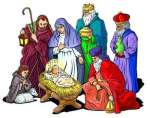 the sanctuary as the congregation softly sings. This moment usually encompasses three songs, one of which is Away in a Manger. Published in the late 1800’s, it has been credited by some to famed 16th century theologian Martin Luther, but there seems to be a lot of disagreement on the facts. At any rate, it’s a beautiful song that takes us back to the night of Jesus’ birth, the night He was born in a stable because there was no room at the inn. The best covers of the song seem to be by country artists, possibly because the majority of them still seem to have some virtue remaining and are therefore capable of singing songs of faith with some sense of authenticity.
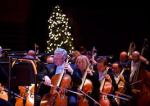 Coming, not His first. Nevertheless, it is such an ingrained part of the holiday season that we won’t quibble over details. It’s a tune best performed in as loud and energetic a fashion as can possibly be mustered…afterall, the book of Psalms directs us to make a joyful noise unto the Lord. So I tend to like boisterous choral or booming orchestral versions of the song. As a matter of fact, when it comes to Joy to the World I am not sure any singer or band could be subtle and hushed, although I am sure some have tried.
 is a Ukrainian carol written early in the 20th century. I’m not sure where it ranks in general popularity since even if you do know the words (and most don’t) it’s not really something you sing as you trek thru the neighborhood on your annual church singalong…the pace is rather quick and not caroling friendly. But I like the tune a lot. It’s kind of a Christmas theme song, one of those tunes that you hear in commercials, in bumper music during talk radio shows, at the mall on the loudspeakers, etc. It’s everywhere, yet not so overdone that it grows tiresome. Plus I think I may have learned to play it in high school as part of the concert band’s holiday show.
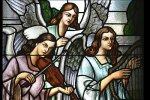 choir it’s absolutely beautiful, but even in just a commonplace group of worshipers or carolers it is usually sung with such fervent spirit that it doesn’t matter if not everyone can actually carry a tune. The aforementioned refrain is Latin for “glory to God in the highest”, which pretty much sums up what Christmas is, or atleast should be, about. I love orchestral versions of the song as well. The music lends itself well to things like French horns, cornets, and trombones. It doesn’t seem to get as much love as a lot of other carols, but I’ll take Angels over Grandma Got Run Over By a Reindeer or I Saw Mommy Kissing Santa Claus any day.
 Anyway, Burl Ives, as some may or may or may not recall, was a folk singer/actor/entertainer from the 1940’s through the 1970’s. But he is most likely best known to most, especially anyone under the age of 35, as the voice of Sam the Snowman, narrator of the perennial Christmas classic Rudolph the Red-Nosed Reindeer. Even as an adult I cannot wait each Christmas season for that TV special. And even though Burl’s performance of the song Rudolph the Red-Nosed Reindeer isn’t at the top of the list (more on that song later), he did contribute two other tunes…Silver & Gold and Holly Jolly Christmas. Holly Jolly Christmas could probably best be described as…catchy. It’s just got that kind of beat. And while some carols are melancholy, many show reverence to Christ, and others are plainly meant for kids, Holly Jolly Christmas is uplifting, positive, and fun without being the least bit childish. It talks about things like “the best time of the year”, “mistletoe”, “cup of cheer”, and “friends you know”. This is the kind of song that should put you instantly in a good mood no matter what’s going on in your life.
 refresher for those who might not know what in the world the 12 days of Christmas actually means. After all, we live in a world where we start celebrating” Christmas almost before Halloween is over and these days almost certainly before Thanksgiving has even arrived. Of course by “celebrating” I mean retail stores and anyone else who has figured out a way to make a buck off of the birth of Jesus Christ. Anyway, originally the 12 days of Christmas were December 25-January 5, followed by Epiphany on January 6 (this is the day that the Magi, aka The Three Wise Men, arrived to visit the baby Jesus…not on Christmas as so many Christmas plays portray). Encompassed within this timeframe is Boxing Day on December 26. Contrary to what some may think, Boxing Day is not the day Canadians and Englishmen come bearing gifts to Muhammed Ali, Mike Tyson, and Floyd Mayweather Jr. January 5 was known as Twelfth Night and was the conclusion to the holiday season. The entire 12 days was a long festival of gift giving & merriment. So basically in the Middle Ages folks in England did what we do today, only they did it in 12 days instead of 2 months and they did it later. December 25 was the actual beginning of the season for them, whereas in modern times most of us are exhausted and ready for the whole ordeal to be over by the time the actual holiday arrives. What we call New Year’s Eve/Day was when they were really into the swing of things. By January 6 we’ve already moved on with our lives and those crazy cats were just winding down. Personally I’d LOVE to see our country revert back to this old fashioned way of doing things, but that and $2 will almost buy me a cup of coffee.
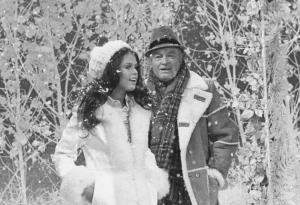 Christmas season’s gain. Silver Bells was written in 1950, and unlike a lot of other Christmas carols that emphasize rustic, old-fashioned, pastoral settings this tune recognizes the hustle and bustle that overcomes a city during the holiday season. What’s funny is that a half century later even that description sounds quaint and charming. This song holds a special place in the hearts of millions of us who grew up watching the annual Bob Hope Christmas Special, which ran on NBC for over 40 years. Three traditions were a huge part of the Hope Christmas show: the introduction of the All America College Football Team, Hope closing the show with his theme song Thanks for the Memory, and a duet featuring Hope and a much younger, very attractive starlet singing Silver Bells. I didn’t realize until I was actually writing this how much of an indelible mark those specials made on me. The last one aired over 15 years ago and Bob Hope himself has been gone for about 6 years. Thanks for the memories indeed Bob.
 The Manofesto