
Bon Jovi declared “We’re halfway there…we’re livin’ on a prayer”. Kenny Loggins asked us to “Meet me halfway, across the sky”. You get the point…we’re half done with this countdown and, in golf parlance, making the turn. Now, it’s not that the first 50 movies I’ve written about are irrelevant. I like them or they wouldn’t be on the list. But now we’re getting serious. The cream rises to the top and this process is starting to get creamy. I will try to avoid becoming too verbose and gushing over these next 50 films…but I cannot guarantee I will be able to comply with that edict. You’re going to see a lot of comedies and Christmas movies from here on in, so I hope you enjoy those as much as I do. And as always, feedback is always appreciated.
At the outset of this series I shared a bit about my thinking when deciding on the Top 100, and one of the things I said I take into consideration is longevity. People who say that their all time favorite movie is one that was just in the theater a year or two ago annoy me tremendously. However, there are exceptions to every rule, and this is about as close to an exception as we’ll get. Little Miss Sunshine was released in 2006 and stars Abigail Breslin, Alan Arkin, Greg Kinnear, and Steve Carell. Not exactly an all star cast, especially when one considers that at the time Carell was just hitting his stride with The 40 Year Old Virgin and The Office was a fairly new television show. However, a good movie should be based on good writing and not just the pop culture It Factor of its cast. After all, Will Smith is still considered one of the biggest movie stars in the world and hasn’t been in anything worth a damn for about a decade. Sunshine is a unique take on the road trip genre, made popular by such fare as Smokey & The Bandit, Rain Man, Tommy Boy, Sideways, Planes, Trains, & Automobiles, and National Lampoon’s Vacation ( two of which we’ll be giving some love to at some point along this path). A 9 year old girl fascinated by beauty pageants receives an opportunity to  compete in one herself. The family treks 800 miles from Albuquerque, New Mexico to Southern California in an old Volkswagen van, and as per usual in road trip flicks, the adventure isn’t boring. Along for the ride is Dad, a down-on-his-luck motivational speaker who says things like “sarcasm is the refuge of losers”…Uncle Frank, a gay Proust scholar who recently attempted suicide…brother Dwayne, a teenager who gets inspiration from Nietzsche and has taken a vow of silence until he can successfully become a pilot…and Grandpa, who was kicked out of the old folks’ home for snorting heroine. Now before any action has taken place or a word of dialogue is spoken, one can see tremendous potential just from those undeniably singular characters. The glue holding it all together is the Mom, a comparatively sane person. I won’t spoil the fun for those who may have thus far overlooked Little Miss Sunshine, but let me say two things. First, Alan Arkin won a well deserved Oscar for his foul mouthed yet relatively brief role as the grandfather. His character makes this movie hands down. I am not sure why his real life son Adam Arkin was not cast as the Dad…it would have been perfect. The other note that needs mentioning is the ending. I suppose it’s not too big of a spoiler to say that, despite all the difficulties along the way the family does make it to the pageant just in the nick of time. Once there it quickly becomes apparent that the little girl is way out of her league, a plain Jane novice amongst little grizzled veterans with layers of makeup, fake eyelashes, and swimsuits the parents should be arrested for allowing them to wear. But she gets on stage and does her thing, and it is one of the funniest scenes you will see on film. You won’t see it coming, but you won’t forget it once you’ve watched.
49 Miracle on 34th Street
Every December our televisions are polluted with Christmas movies, and I love every second. Channels like Hallmark and ABC Family introduce new made-for-TV flicks each year, and some of them are halfway entertaining. The big studios usually come up with one or two holiday themed films, with fairly recent examples being stuff like Bad Santa, Christmas with the Kranks, Deck the Halls, and Four Christmases. Sometimes these are okay, but rarely do they have a real impact or any sustainable staying power. They entertain for a couple hours but ultimately are completely forgettable. But there are a handful of films that have become classics…Christmas traditions almost as important as twinkle lights,  eggnog, and mistletoe. You’ll see several of those on this list, and one of the oldest is Miracle on 34th Street. Made in 1947, in a post-war era that wanted feel good stories and laughter, it’s the story of a department store Santa who is put on trial to prove whether or not he is real. In a bit of prescient marketing, the film opens with Macy’s Thanksgiving Day Parade, which is now thought of as the official kickoff to the Christmas season. Santa charms most of his co-workers, but he sets his sights on a skeptical single Mom and her unbelieving, precocious young daughter. No details are ever given as to why Mom is single or the reasons for her cynicism, but one can assume that she was hurt badly by a man. Santa is joined by a friendly lawyer who has a thing for Mom, which comes in handy when Ol’ Saint Nick runs up against the legal system. I am quite sure that anyone over the age of 30 has seen Miracle on 34th Street. I do worry that younger generations may not fully embrace its greatness since it isn’t shown on TV as much these days. Not that long ago it was shown on NBC immediately following the Macy’s parade, which seemed appropriate. Now NBC airs a dog show. Movie channels like AMC and TCM still show Miracle, but not as much as one may think. In 1994 a remake was made, and it isn’t bad as far as remakes go. Macy’s refused to participate and Gimbel’s was already out of business, so two fictional stores are substituted. Other small changes are made to the plot, but overall it stays fairly faithful to the original and is rather likeable. Still though, it is almost always my stance that the original is better than a remake and I hope that in this case we never stop watching the 1947 classic…in black and white. There is a colorized version, but colorization of black and white films is just so wrong, plus they usually give me a headache.
48 You’ve Got Mail
Bogey and Bacall… Hepburn and Tracy…Astaire and Rogers. Classic screen pairings are exceptional. The chemistry has to be just right, and it  cannot be forced or planned…the magic just happens. It is my personal opinion that Tom Hanks and Meg Ryan are one of those magical duos. 1998’s You’ve Got Mail was their third movie together, and is kind of a remake of the 1940 Jimmy Stewart vehicle The Shop Around the Corner. I wouldn’t consider it a true remake, as it is significantly updated to include modern technology…e-mail and chat rooms play a key role and the title itself is borrowed from AOL’s well known welcome to customers signing in to their account. But the basic premise is still there…two lonely people anonymously corresponding and falling in love in the process, all while they are totally unaware that they know each other in real life. This update folds in the concept of competing bookstores, which is likely a big factor in its likeability for me. Greg Kinnear, Parker Posey, Jean Stapleton, and John Randolph have amusing supporting roles, and that is a key ingredient in any great film. Like any tasty recipe the flavors have to maintain a delicate balance. You’ve Got Mail seems to pop up on television a lot, and I must confess that I will generally watch unless I am really busy, which is rare. Further Hanks/Ryan pairings seem unlikely…they are both getting older and Meg Ryan has paid a few too many visits to her friendly neighborhood Botox provider…but we shall savor the goodness they’ve provided for us for many years to come.
47 Elf
While Miracle on 34th Street has long been a bona fide Christmas classic, there are a few films that are growing into that role. One of those up and comers is 2003’s Elf, starring Will Ferrell. Ferrell seems to be one of those actors that you either love or hate…there doesn’t seem to be much middle ground amongst fans. That is largely a function of his sophomoric humor and  childlike performances. But that irreverent immaturity works perfectly in this movie. As the story goes, an orphaned baby crawls into Santa’s sack on Christmas Eve and ends up living at the North Pole. After three decades of being raised as an elf, Buddy faces the harsh reality that he is actually not one at all and sets off… passing “through the seven levels of the Candy Cane Forest, through the sea of swirly twirly gum drops, and then through the Lincoln Tunnel”…for New York City to find his real Dad, a book publisher who is on Santa’s Naughty List. It’s a fun twist on the standard fish-out-of-water tale, as Buddy’s innocent elfish behavior befuddles those around him while at the same time making us, the audience, crack up laughing. Buddy does things like chew old gum that people have stuck under tables, eat pasta covered in syrup, and burst into a diner with the moniker “World’s Best Cup of Coffee” congratulating them enthusiastically on their accomplishment. He eventually finds his crusty Dad, played by James Caan, and somehow stumbles into Gimbel’s (which was actually defunct by 2003, but we won’t quibble) where he is mistaken for an employee. He eventually gets fired after hysterically attacking a faux Santa (“You stink. You smell like beef and cheese! You don’t smell like Santa.”), but not before becoming enamored with the lovely Jovie, with whom he develops a relationship. The climax involves the real Santa, Christmas caroling in Central Park, and Buddy’s family & friends uniting to save Christmas. It’s all very silly, very harmless, and a lot of fun. I don’t think it is farfetched to assume that Elf will undoubtedly take its rightful place alongside A Christmas Carol, It’s A Wonderful Life, A Christmas Story, and others in the pantheon of beloved holiday films…if it hasn’t already.
46 When Harry Met Sally
I am not afraid to admit that I, as a man, like romantic comedies. I would much rather see two people go about the meandering yet fun process of falling in love than watch a bunch of pointless explosions, shootings, and car chases. All that stuff can be entertaining on occasion, but I generally prefer something with an actual storyline. When Harry Met Sally is the gold standard of rom-coms, as they are known. It is the one that every film of its ilk is compared to. Released in 1989, the story covers about a decade and a half and stars Meg Ryan and Billy Crystal, who tackle the question “can men and women be just friends?”. While the pairing of Ryan and Crystal doesn’t have quite the enchanting luster of Ryan and Tom Hanks, the two do have a certain quirky chemistry. For guys like me seeing a schlub like Crystal charm his way into the life of a babe like Ryan (pre-Botox addiction) is encouraging even if it is fake and in no way reflects how the world works in reality. Our two lovebirds meet in college and instantly hate each other. This part of the film is the weakest only because it is laughable to see a 40 year old Crystal portray a character half his age, but the interaction and dialogue is so fun and snappy that one can forgive the infraction. As the relationship between Harry and Sally grows so does the film grow on the viewer as things progress. Carrie Fisher and Bruno Kirby provide amiable support as the obligatory best friends, and the music, done mostly by an at the time unknown Harry Connick Jr. seals the deal. The deli scene…you know what I’m talking about – “I’ll have what she’s having”…is legendary and just another memorable moment that makes the movie great.
Related Articles
- Take Three: Alan Arkin (filmexperience.blogspot.com)
- 25 of the Most Overrated Movies of All-Time (coedmagazine.com)
- 8 reviews of Little Miss Sunshine (rateitall.com)
- “Why did so few specialty films cross over this summer?” (gointothestory.com)
 whom I considered my friends live far away from me…Dallas TX, Columbus OH, Charleston WV, and many other far flung towns across the map, from Montana to Georgia to Florida New York to California. So I am grateful that technology allows me to maintain some form of contact. However, Facebook is also rather addicting. There are countless games, quizzes, polls, and other applications that one can mindlessly get lost in for hours. I’m not against some pointless fun on occasion, but I do feel like I waste a lot of time that could otherwise be spent on more consequential activities like prayer, studying The Bible, reading a good book, or even getting the proper amount of sleep.








 fondly recall the Saturday morning Chipmunks cartoon. But their first success is still their best…an almost too simple tune about being anxious (as most kids are) for Christmas to arrive and wanting toy planes and a hula hoop.
 Jesus and the gift of salvation to the world, it’s a tune supple enough to be energetically sung by a choir or congregation, or solemnly played by any manner of instrument.
 would give anything if all their kids wanted were hopalong boots or dolls that can talk as opposed to the mega-expensive video games, computers, and various other electronic toys today’s children demand, and a lesson in economics can be gleaned when pondering a “five-and-ten” in comparison with their modern counterparts, dollar stores. I dig almost anything that hearkens back to a less complicated time, even if, in reality, those times weren’t much less complicated.
  I made this a tie for one reason. These three songs have a common thread…home. However and wherever one defines “home”, it’s where we want to be for Christmas. I’ll Be Home for Christmas was written and recorded during World War II and was extremely significant to soldiers and their families.
  home”. Please Come Home for Christmas has a couple things going for it in my universe. It was originally a blues carol, and its best covers have been done by two of my favorite bands,
  Another tie, another reason. Both of these songs have attachments to movies. Let It Snow is played at the end of my favorite action flick, Die
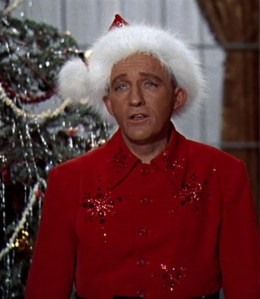
  Hard, which I consider a Christmas movie even if no one else does. Meli Kalikimaka (Hawaiian for Merry Christmas) is prominent in Chevy Chase’s classic Christmas Vacation. Bing Crosby does the definitive version of Mele Kalikimaka, while Let It Snow is done best by original artist Vaughn Monroe but a viable alternative is the Dean Martin cover. Let It Snow is technically a winter song and makes no references to Christmas at all, but it has become so closely associated with the holiday season that it qualifies as a Christmas carol.
 into English as the more familiar O Come All Ye Faithful in the 19th century. The words of the song exhort us to celebrate the birth of Christ, to adore and behold The King. However, I have to say that the best versions of this song are audacious, grand, thunderous ensemble pieces by orchestras like The Boston Pops or the Mannheim Steamroller.
 (brother of John, the founder of Methodism) and paired with music composed by Felix Mendelssohn a hundred years later, this is just one of those songs that IS Christmas. It speaks of everything Christmas should encompass: glory to The King (Jesus Christ, not Elvis), peace, mercy, joy, triumph, and righteousness. Like other songs it speaks about the birth of Christ and what that means to the world, and since that is the whole point of Christmas it’s fine with me if the message is rehashed in as many songs as possible. Off the top of my head I cannot think of one singular cover that stands out…they’re all great since it’s a pretty difficult song to mess up. It lends itself well to orchestral or instrumental versions, but choral versions with the words are probably my favorite.
 of Christ is the centerpiece of the holiday. Adults who don’t consider themselves to be particularly spiritual appreciate things like home, family, and sentimental memories. But for kids Christmas is all about The Big Guy, the Jolly Old Elf, the fat man in the red suit…Santa Claus. So it makes sense that there would be a plethora of Christmas carols dedicated to Kris Kringle. The two most pervasive of these have been covered by an endless array of artists with mixed results, but they are so wonderful because they are so descriptive. They paint such a vivid picture of the mythology of Santa that anyone who doesn’t know the story can have it re-created in their mind just from these songs. Here Comes Santa Claus was written in 1946 by cowboy Gene Autry, who also sang the definitive version. About Santa, the singer sings “he doesn’t care if you’re rich or poor, he loves you just the same…Santa knows that we’re God’s children, that makes everything right…fill your hearts with Christmas cheer cause Santa Claus comes tonight”. What a great message. Santa Claus Is Coming to Town was written in 1934 and is a sort of cautionary tale for children. It warns them that Santa knows when they are sleeping and awake, knows when they’ve been bad or good, and will be making a list and checking it twice so he can divide it into two categories: naughty and nice. Call it gentle discipline or call it mind games…but it works and has scared millions of kids into being good little boys and girls. Bruce Springsteen might have the best known cover of the tune, but I think that’s simply because it’s so odd to hear such a gruff and tough rocker singing a children’s Christmas carol.
 the sanctuary as the congregation softly sings. This moment usually encompasses three songs, one of which is Away in a Manger. Published in the late 1800’s, it has been credited by some to famed 16th century theologian Martin Luther, but there seems to be a lot of disagreement on the facts. At any rate, it’s a beautiful song that takes us back to the night of Jesus’ birth, the night He was born in a stable because there was no room at the inn. The best covers of the song seem to be by country artists, possibly because the majority of them still seem to have some virtue remaining and are therefore capable of singing songs of faith with some sense of authenticity.
 Coming, not His first. Nevertheless, it is such an ingrained part of the holiday season that we won’t quibble over details. It’s a tune best performed in as loud and energetic a fashion as can possibly be mustered…afterall, the book of Psalms directs us to make a joyful noise unto the Lord. So I tend to like boisterous choral or booming orchestral versions of the song. As a matter of fact, when it comes to Joy to the World I am not sure any singer or band could be subtle and hushed, although I am sure some have tried.
 is a Ukrainian carol written early in the 20th century. I’m not sure where it ranks in general popularity since even if you do know the words (and most don’t) it’s not really something you sing as you trek thru the neighborhood on your annual church singalong…the pace is rather quick and not caroling friendly. But I like the tune a lot. It’s kind of a Christmas theme song, one of those tunes that you hear in commercials, in bumper music during talk radio shows, at the mall on the loudspeakers, etc. It’s everywhere, yet not so overdone that it grows tiresome. Plus I think I may have learned to play it in high school as part of the concert band’s holiday show.
 choir it’s absolutely beautiful, but even in just a commonplace group of worshipers or carolers it is usually sung with such fervent spirit that it doesn’t matter if not everyone can actually carry a tune. The aforementioned refrain is Latin for “glory to God in the highest”, which pretty much sums up what Christmas is, or atleast should be, about. I love orchestral versions of the song as well. The music lends itself well to things like French horns, cornets, and trombones. It doesn’t seem to get as much love as a lot of other carols, but I’ll take Angels over Grandma Got Run Over By a Reindeer or I Saw Mommy Kissing Santa Claus any day.
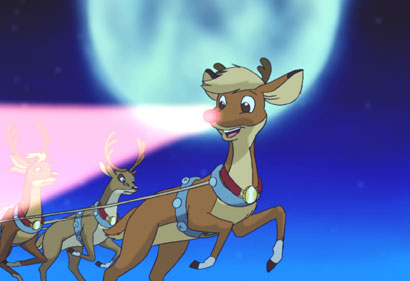
 Anyway, Burl Ives, as some may or may or may not recall, was a folk singer/actor/entertainer from the 1940’s through the 1970’s. But he is most likely best known to most, especially anyone under the age of 35, as the voice of Sam the Snowman, narrator of the perennial Christmas classic Rudolph the Red-Nosed Reindeer. Even as an adult I cannot wait each Christmas season for that TV special. And even though Burl’s performance of the song Rudolph the Red-Nosed Reindeer isn’t at the top of the list (more on that song later), he did contribute two other tunes…Silver & Gold and Holly Jolly Christmas. Holly Jolly Christmas could probably best be described as…catchy. It’s just got that kind of beat. And while some carols are melancholy, many show reverence to Christ, and others are plainly meant for kids, Holly Jolly Christmas is uplifting, positive, and fun without being the least bit childish. It talks about things like “the best time of the year”, “mistletoe”, “cup of cheer”, and “friends you know”. This is the kind of song that should put you instantly in a good mood no matter what’s going on in your life.
 refresher for those who might not know what in the world the 12 days of Christmas actually means. After all, we live in a world where we start celebrating” Christmas almost before Halloween is over and these days almost certainly before Thanksgiving has even arrived. Of course by “celebrating” I mean retail stores and anyone else who has figured out a way to make a buck off of the birth of Jesus Christ. Anyway, originally the 12 days of Christmas were December 25-January 5, followed by Epiphany on January 6 (this is the day that the Magi, aka The Three Wise Men, arrived to visit the baby Jesus…not on Christmas as so many Christmas plays portray). Encompassed within this timeframe is Boxing Day on December 26. Contrary to what some may think, Boxing Day is not the day Canadians and Englishmen come bearing gifts to Muhammed Ali, Mike Tyson, and Floyd Mayweather Jr. January 5 was known as Twelfth Night and was the conclusion to the holiday season. The entire 12 days was a long festival of gift giving & merriment. So basically in the Middle Ages folks in England did what we do today, only they did it in 12 days instead of 2 months and they did it later. December 25 was the actual beginning of the season for them, whereas in modern times most of us are exhausted and ready for the whole ordeal to be over by the time the actual holiday arrives. What we call New Year’s Eve/Day was when they were really into the swing of things. By January 6 we’ve already moved on with our lives and those crazy cats were just winding down. Personally I’d LOVE to see our country revert back to this old fashioned way of doing things, but that and $2 will almost buy me a cup of coffee.
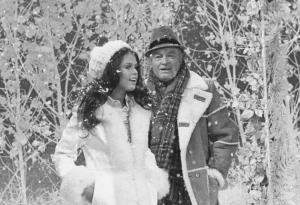 Christmas season’s gain. Silver Bells was written in 1950, and unlike a lot of other Christmas carols that emphasize rustic, old-fashioned, pastoral settings this tune recognizes the hustle and bustle that overcomes a city during the holiday season. What’s funny is that a half century later even that description sounds quaint and charming. This song holds a special place in the hearts of millions of us who grew up watching the annual Bob Hope Christmas Special, which ran on NBC for over 40 years. Three traditions were a huge part of the Hope Christmas show: the introduction of the All America College Football Team, Hope closing the show with his theme song Thanks for the Memory, and a duet featuring Hope and a much younger, very attractive starlet singing Silver Bells. I didn’t realize until I was actually writing this how much of an indelible mark those specials made on me. The last one aired over 15 years ago and Bob Hope himself has been gone for about 6 years. Thanks for the memories indeed Bob.
 The Manofesto