
 As with 80’s Movie Mania, when looking at these wonderful (for the most part) holiday films & specials I have taken into consideration a few important factors:
*Re-Watchability – Is it on television a lot during the holidays?? If it is on TV do I stop & watch??
*Relevance – Does the story hold up well?? Or do modern societal norms & changes in technology make it feel dated?? How “Christmasy” is it??
*Quotability – Fun, interesting, well-written movies of all genres are usually very quotable.
*Cultural Impact – Is it one of those movies that everyone of a certain age has seen?? Is it familiar to multiple generations?? Do people still occasionally talk about it & watch it even many years after its release?? This is a given for some holiday films, but not all of them.
*Pleasure – Do I enjoy watching this movie?? We’ve all read books or watched shows/movies just because we felt compelled to…because we wanted to be cool or seem educated. But what do you enjoy when no one else is around??
I’ve broken down the third round of Merry Movie Mayhem…The Sweet 16…into two parts. Today we’ll see semifinal action in the North Pole and Eggnog divisions.


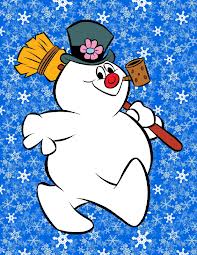
It’s A Wonderful Life vs. Frosty the Snowman
IAWL is a 1947 feature film about a depressed man being shown by a guardian angel how his life has positively impacted those around him. Frosty is a 1969 animated television special based on a song that had become popular two decades earlier and tells the story of a snowman who comes to life with the help of a magician’s hat. IAWL was nominated for a half dozen Academy Awards but was only a modest box office success. It became a beloved holiday classic in the 1970s & 80s when local TV stations across America utilized the film’s public domain status to fill their schedules throughout the Christmas season. Frosty has aired on television annually for nearly a half century.
The Verdict: IAWL. Frosty the Snowman is awesome. The song is catchy, the animation is solid, and the characters are fun. But It’s A Wonderful Life has the  incomparable combination of director Frank Capra & leading man Jimmy Stewart. The premise of an angel showing a person what the world would’ve been like without them has been ceaselessly borrowed, copied, & parodied throughout pop culture for decades. Some may have railed against its plentiful repeated airings once upon a time, but that backlash seems to have diminished.
The Polar Express vs. Planes, Trains, & Automobiles
Motion capture technology is the process of recording the movement of objects or people. It is used most often in video games, but there have been a number of films that used it in part, or in the case of The Polar Express for the entire film. It is certainly a quantum leap from the animation past generations have experienced. However, while I don’t want to push the technical aspects aside…especially since I am truly fascinated by the beauty of motion capture…the most important thing to me is the plot. On its surface The Polar Express is a tale about believing or not believing in Santa Claus, which is a perfectly lovely Christmas story. Childhood. Wonder. Imagination. A hero’s journey. All are wonderful themes. But look a little deeper. Can it be viewed as an allegory?? Does The North Pole represent Heaven?? Is Santa a stand-in for God?? Is The Conductor a Christ-like figure whom children must rely on to deliver them to The Promised Land?? Is The Hobo a Holy Spirit that guides & directs those who are lost?? Interpretation is an individual choice, but I certainly believe that the movie could be viewed thru this prism. I’ve always felt that Santa Claus doesn’t have to be an enemy of Jesus Christ, that parents can use the story of Santa to teach children about Jesus. I realize that many disagree with that perspective, and I respect those opinions, but it’s an interesting idea to ponder. Planes, Trains, & Automobiles is ostensibly more straightforward…a simple buddy comedy set at Thanksgiving. But then again is it?? It also has deeper themes. Friendship. Love. Loss. Family. Self-respect. Priorities. This movie has layers folks!! Yes it gets a little mawkish in the last few minutes, but what exactly is wrong with that?? Steve Martin & the late, great John Candy are known as comedic actors, but in Planes, Trains, & Automobiles they showed that if given the chance they had the kind of dramatic chops that made Tom Hanks a multi-Oscar winner. Despite all the memorable films he wrote & directed John Hughes has always been underappreciated, and this is one of his best films.
The Verdict: Planes, Trains, & Automobiles. I adore The Polar Express. In the past decade it has established itself as a certified holiday classic. We’ll still be 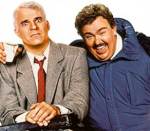 watching it every December a half century from now, and someday its cutting edge technology will seem quaint & nostalgic like we view animation from the mid-20th century nowadays. But Planes, Trains, & Automobiles has been around longer and is just as entertaining today as it was twenty years ago. It may not have turkey, parades, or football, but it as much quintessential Thanksgiving as any of those things.

A Christmas Story vs. The Muppet Christmas Carol
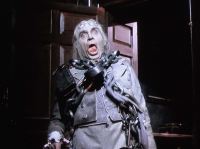
Jean Shepherd was a somewhat well-known radio personality back in the 1960’s & 70’s when listening to a guy talk on the radio for hours was a popular entertainment option. His shows weren’t about sports or politics or current events. Shepherd told stories…spinned yarns…spoke monologues…conveyed anecdotes…articulated poetic commentary about life. He allegedly had no script, and many of his stories were about his childhood in pre-WWII Indiana. Those stories eventually evolved into several books like In God We Trust All Others Pay Cash, Wanda Hickey’s Night of Golden Memories, & A Fistful of Fig Newtons. A potpourri of those tales were eventually turned into the 1983 film A Christmas Story, which wasn’t a huge box office success but has since become a holiday tradition, mostly because of an annual 24 hour marathon on television from 8pm on Christmas Eve until 8pm on Christmas Night. While 90s kids have grown up with A Christmas Story as an integrated part of their childhood, children in the 70s grew up with The Muppets. They may seem kind of corny in today’s computer generated world, but when I was a kid they were cool & they were everywhere, including a variety show on television for a few years. They eventually made it to the big screen and there have been numerous feature films & TV movies. The Muppet Christmas Carol premiered in 1992 with modest box office success and tepid critical reviews. However, like many other Christmas movies none of that stuff has mattered in the long run, as fans are still enjoying the film 25 years later. The Muppets have always had human performers interacting with the furry creatures, and in this movie Michael Caine gives…to the surprise of many…one of his best performances as Ebenezer Scrooge. The plot is more faithful to the source material than one might expect, but also adds some of its own unique touches.
The Verdict: A Christmas Story. This is a very difficult decision. I LOVE The Muppet Christmas Carol. It is well written, funny, & full of the kind of holiday magic  that defines the best Christmas movies. However, the cultural impact of A Christmas Story is undeniable. It has struck a chord with the masses, in large part because everyone can identify with Ralphie Parker as he navigates the ebb & flow of childhood, and because all of us can remember wanting Santa Claus to bring us that one special gift really really really badly.
White Christmas vs. A Charlie Brown Christmas
White Christmas is well-known as the best-selling song of all time, and the song itself was introduced to the masses in the 1942 Bing Crosby/Fred Astaire film Holiday Inn. Twelve years later the eponymous film was produced, with Danny Kaye filling in for Astaire in what isn’t really a sequel or a remake, but a creation that shares artistic DNA with Holiday Inn. The film is visually striking, and there are several memorable musical numbers. Charles Schulz created the Peanuts comic strip in 1950, and it eventually became a marketing juggernaut with fingerprints on every facet of media, advertising, merchandise, movies, & books. A Charlie Brown Christmas was the first animated Peanuts television special, and a half century later is still aired annually.
The Verdict: Charlie Brown. Two strikes go against White Christmas. First of all, other than its title and a musical number at the very end it really doesn’t have all  that much to do with Christmas. I don’t mean that to sound harsh because I can’t express strongly enough how much I adore the movie, but at its heart it is a romantic comedy/musical that would be almost as enchanting if it were set in February…it’s just that the Christmas angle makes it that much more exceptional. Secondly, there is a subplot where one of the female leads becomes upset at the Crosby character because she thinks he is exploiting the unfortunate plight of General Waverly. He’s really not…except that he still kind of is. Crosby isn’t making any money off the Christmas Eve bash he’s planning at The General’s country inn, but he does go on national television and sing a sad song that pretty much makes the old guy seem like a pathetic has-been that is in desperate need of charity. That song & that plot point has always bothered me. Conversely, A Charlie Brown Christmas is all about Christmas, weaving in ideas about commercialism and struggling to find the Christmas spirit, while directly addressing…unlike most Christmas movies…what Christmas is actually all about. The tone is perfect, the music is sublime, and the cultural impact is unquestionable.
 A few years ago I wrote about an idea for a




 of a king braving the harsh winter to bring alms to the poor on the Feast of Stephen on December 26th. His page finds he can’t go on through the harsh conditions and is directed to walk in the footprints that the king has made in the snow. The Hobo directs Hero Boy to follow behind him and ultimately helps him reach the engine before they make it to the tunnel, thus allowing him to find and help his friend. The Hobo can be viewed as a representation of the Holy Spirit that he guides those who believe in Him to safety even in perilous times.
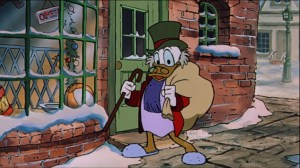
 try to keep it all the year. I will live in the Past, the Present, and the Future. The spirits of all Three shall strive within me! I will not shut out the lessons that they teach! Tell me that I may sponge the writing from this stone! – Ebenezer Scrooge
 where he encounters the charity collectors rather than at his office.
 home.
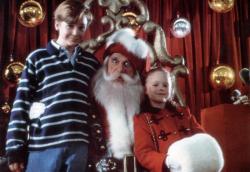
home. duties and responsibilities of Santa Claus in perpetuity until such time that wearer becomes unable to do so by either accident or design. – Bernard the Elf
 number for her curious grandchildren and it turned out to be a phone sex line. In 1997, when Disney received complaints from parents whose children called the number and racked up huge phone bills, the studio take action and cut the line for future releases.

 spinach.” – Jim Hardy & Ted Hanover








 innocent in comparison, but anyone who remembers high school knows what a huge deal those seemingly innocent obstacles feel like at the time. Based on a 1971 play that I have admittedly yet to see but hope to someday, Grease has long been one of my very favorite movies. John Travolta and
  track down the convict. The cat & mouse game, the close calls, and the daring escapades of Kimble, who is concurrently pursuing and being pursued, gives the viewer a heart pounding edge-of-your-seat thrill ride while always remaining within the realm of plausibility and never straying from writing that is nothing short of excellent. The Fugitive is that rare action film with a well laid out plot. It does not rely on phony looking special effects and mindless explosions and gunfire for no apparent reason. The bus wreck/train crash that sets the chase in motion by facilitating Kimble’s escape is one of the more memorable scenes in recent movie history and kudos should be given to the folks who pulled that off. The climax is exciting though convoluted. The details of who really killed Kimble’s wife and why are secondary to the fact that it wasn’t him, he confronts the real culprit, and Gerard is thrown into the mix as a wild card whose actions are unpredictable. The one-armed man is sort of a
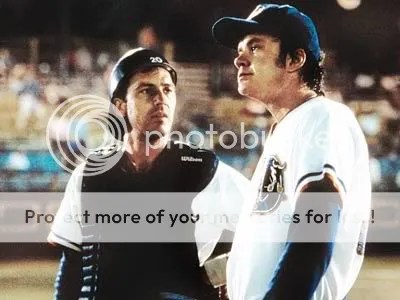 aren’t playing for megabucks and being treated like kings. They are renting rooms, riding on buses, and finding ways to combat boredom between games. Kevin Costner stars as Crash Davis, a long-in-the-tooth veteran catcher who is given the task of holding the hand of dimwitted bonus baby pitcher Nuke Laloosh, played by Tim Robbins in his breakout role. They form an odd triangle with Annie Savoy (played by Susan Sarandon), a groupie who chooses one player from the Durham Bulls each season with which to have an affair. Annie is…unique. She has a singular set of values, and views herself as sharing more than just a bed with her chosen beau. It is a strange brew of spiritualism, friendship, poetry, metaphysics, sensuality, and moral support. She tells us, in a voiceover at the start of the film, that she believes in “the Church of Baseball” because she has “tried all the major religions, and most of the minor ones. I’ve worshipped Buddha, Allah, Brahma, Vishnu, Siva, trees, mushrooms, and Isadora Duncan. There are 108 beads in a Catholic rosary and there are 108 stitches in a baseball. When I heard that, I gave Jesus a chance. But it just didn’t work out between us. The Lord laid too much guilt on me. I prefer metaphysics to theology. You see, there’s no guilt in baseball, and it’s never boring… which makes it like sex. There’s never been a ballplayer slept with me who didn’t have the best year of his career. Making love is like hitting a baseball: you just gotta relax and concentrate. Besides, I’d never sleep with a player hitting under .250… not unless he had a lot of RBIs and was a great glove man up the middle. You see, there’s a certain amount of life wisdom I give these boys. I can expand their minds. Sometimes when I’ve got a ballplayer alone, I’ll just read Emily Dickinson or Walt Whitman to him, and the guys are so sweet, they always stay and listen. ‘Course, a guy’ll listen to anything if he thinks it’s foreplay. I make them feel confident, and they make me feel safe, and pretty. ‘Course, what I give them lasts a lifetime; what they give me lasts 142 games. Sometimes it seems like a bad trade. But bad trades are part of baseball It’s a long season and you gotta trust. I’ve tried ’em all, I really have, and the only church that truly feeds the soul, day in, day out, is the Church of Baseball.” When Crash refuses to “try out” Nuke becomes Annie’s boy toy by default. Meanwhile, the relationship between pitcher and catcher is volatile, as world-weary Crash resents the “million dollar arm and ten-cent head” of the wildly goofy Nuke. The supporting cast is chock full of unknowns whose career highlight likely was Bull Durham, but that is just fine. The three main characters along with a strong, well written, amusing script are enough to make this a movie that has stood the test of time. One cannot help but think of it when attending any type of baseball game. Every time I see a “conference” on the mound I wonder if they are really talking about live roosters, jammed eyelids, and how candlesticks make a nice wedding gift. Eventually our trio comes to a crossroads. Nuke is called up to “The Show” and we get an inkling that some of Crash’s wisdom may have actually seeped through. Crash is released from the team once his babysitting task is done and must decide whether or not to call it a career or keep chasing a dream he knows will never become reality. And Annie must face her feelings for Crash. There is a certain sweetness mixed in with the hilarity, and that is a good combination. Writer/director Ron Shelton has done a few other notable films…White Men Can’t Jump and another Costner vehicle, Tin Cup, among them. But Bull Durham is one more case of lightning in a bottle, a once in a lifetime piece of magic that is almost impossible to replicate.
 The Manofesto